Wanci Zilaiye V1.0.2 is out
Android and Mac (Intel and M-series). Works offline. Zero permissions, no network, no private data.
Aubzhang studies English on Duolingo every day. On and off, three years now. The streak number climbs, the progress bar looks great, and one awkward fact remains: almost no words actually stay in the head.
Aubzhang can "recognize" plenty of words. But ask him where any of them came from and he's got nothing. Look one up in a dictionary and you get a dry definition. A dozen years as a product manager left him with one bad habit: when something doesn't work well, his first instinct isn't to switch products. It's to build one.
Aubzhang searched the whole market. Most of it is dictionary tools, or root words tacked on as an afterthought. Not one product actually treats etymology breakdown as the core.
"If it doesn't exist, Aubzhang builds his own weapon."
With WorkBuddy as the AI coding tool, Aubzhang burned a week of nights — every night until 2 a.m. — and forced an app called "Wanci Zilaiye" (a vocabulary app based on etymology) into existence. It was meant for personal use. Then his third-grade daughter looked up a few words and said: "Dad, reading it by roots, it's easier to say out loud."
Today it officially ships V1.0.1. Let Aubzhang walk you through how many stubborn details are hiding in this deceptively simple tool.
1. What Makes This App Good
1. Only 961 words have an etymology story — on purpose
The full library has 10,000 words. Only 961 come with an etymology story (9.6%). Aubzhang's rule is hard: if a word has no root, don't invent a story. For high-frequency words like "the" and "and," forcing a "fun memory trick" onto each one is treating users like idiots. Professionalism means rather nothing than nonsense.
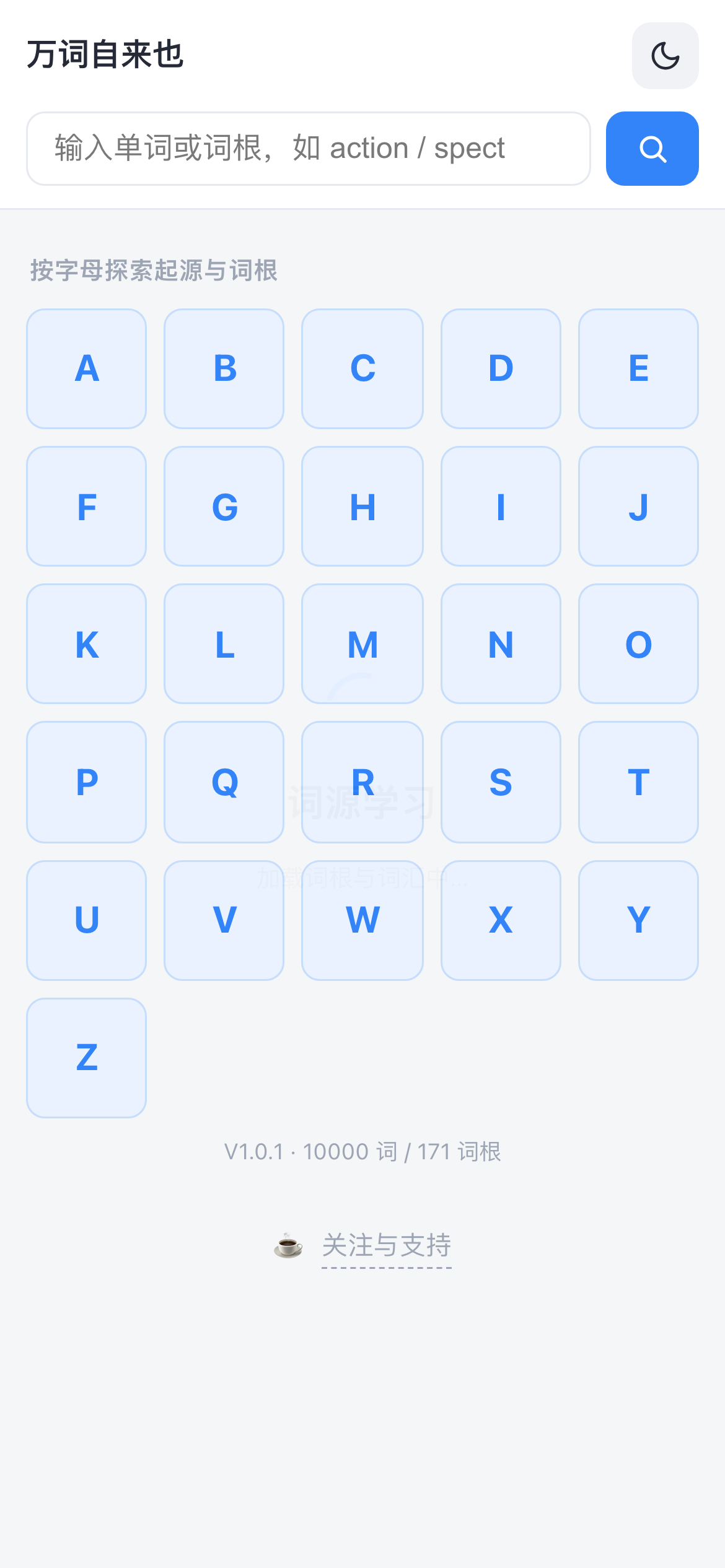
2. The market lists thousands of roots. Aubzhang kept 171
Root-word references on the market run to thousands. You look one up, then never meet it again for the rest of your life — that dictionary-style dump does nothing for memory. Aubzhang's cut was clean: keep only the 171 core roots with the strongest word-building power and the strictest logic. Those 171 roots lead to nearly a thousand words. The most productive one alone is a family of 70.
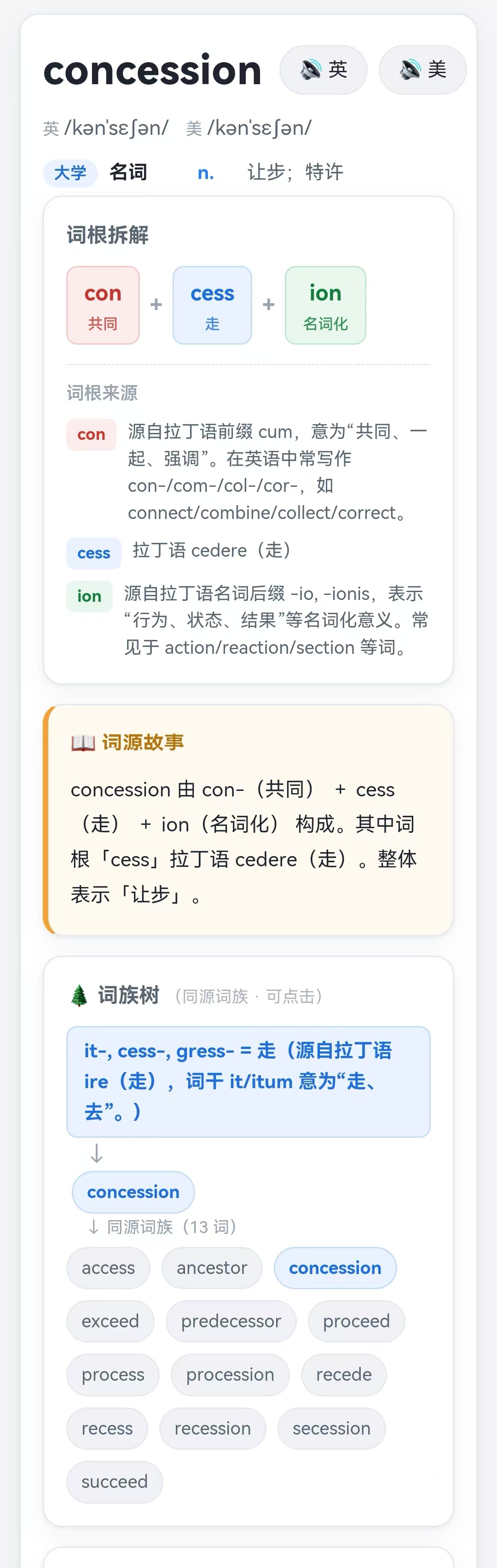
3. See the skeleton of a word at a glance: red, blue, green, gray
The word breakdown page runs a strict semantic color code: prefix (red), root (blue), suffix (green), non-root (gray). A few glances and it becomes muscle memory. Scan the color distribution and the structure of the word surfaces by itself. This isn't decoration. It's visual encoding.
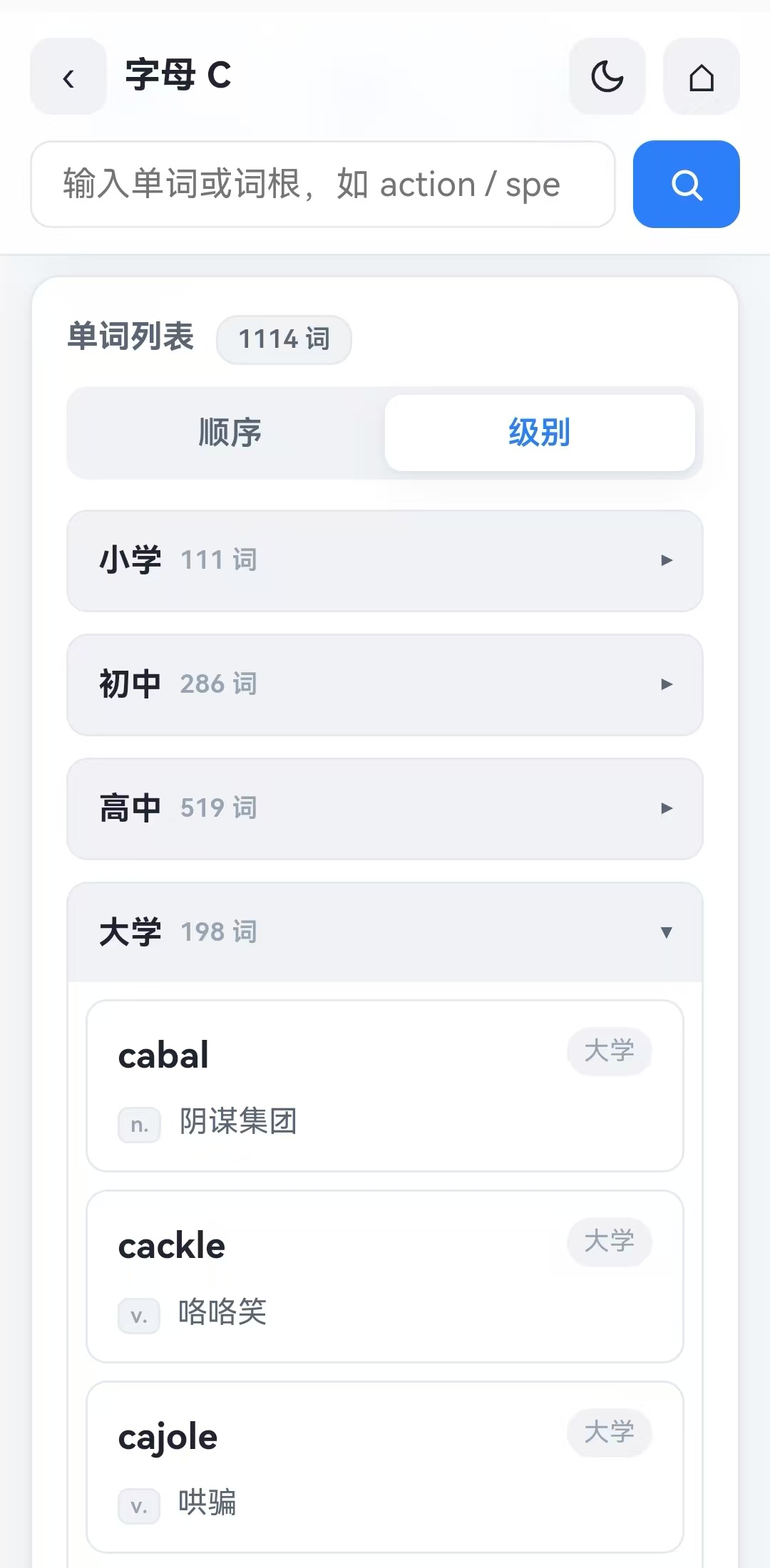
4. Ten thousand words — and 1,546 of them at primary-school level
The library has 10,000 words across four tiers: primary, middle school, high school, university. The Shanghai primary curriculum lists about 600 words. Aubzhang pushed the primary tier to 1,546 — stocking above first-tier-city standards so a kid doesn't idle in the shallow end. Even from zero, there's a starting point.
5. Look it up, drill it, test it
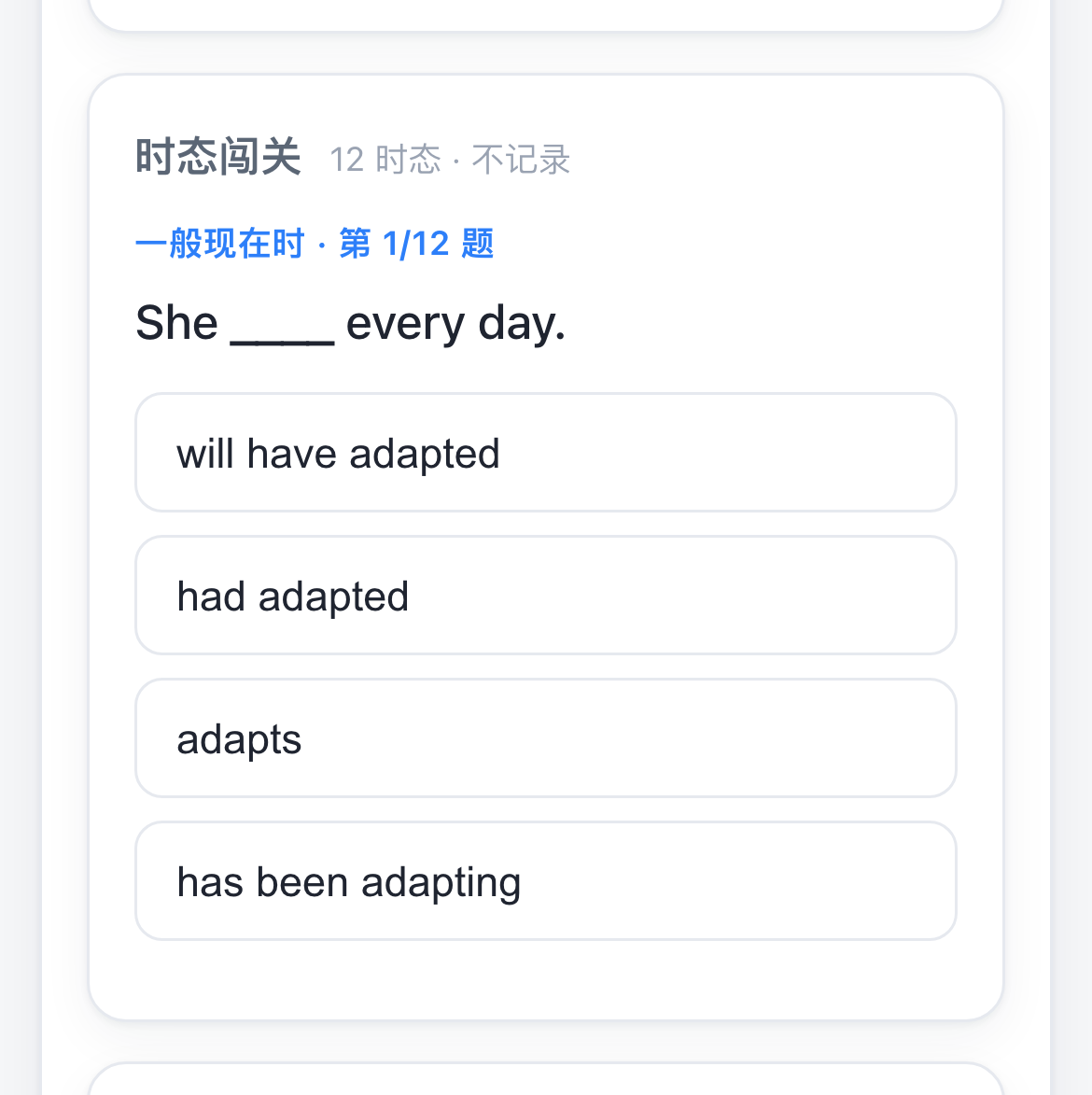
The word page shows past tense, past participle, third-person singular outright. Every word carries self-tests: three kinds of multiple choice — word form, root, definition. Verbs get a 12-tense challenge: a context like "She ____ every day." and you fill the blank. A word only counts as learned once it sits inside a real sentence.
6. Audio quality and phonetics: no compromise on either
Pronunciation absolutely refuses stiff TTS. Aubzhang pre-loaded 20,000 high-quality audio clips (10,000 words × British and American), which pushed the installer into the tens of megabytes — in exchange for instant offline playback and consistent quality. On a plane, in the subway, tap and it speaks.
Phonetics use the strictest IPA, not one diacritic dropped. Rigor is this product's base coat.
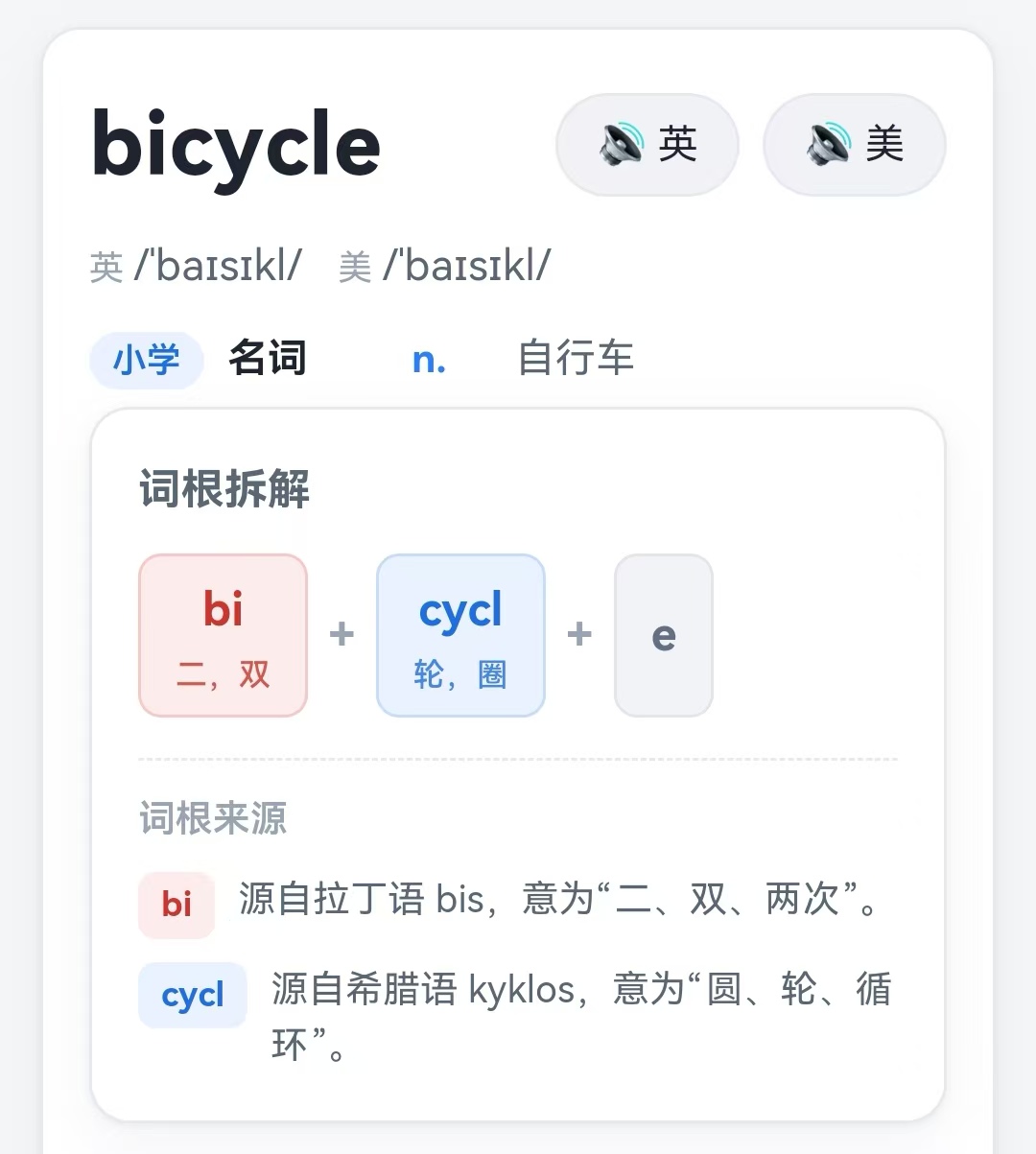
7. Zero permissions, every platform covered
The phone build locks to portrait to prevent mis-taps. The Mac build runs natively on both Intel and M-series chips. The app requests not a single permission: no network, no storage, no microphone. Clean. No shady behavior.
2. That Week's Tuition
Tuition 1: Vague orders get vague garbage
Early on, Aubzhang liked handing AI macro orders like "optimize the interface." The result: a pile of self-important changes and colors flying everywhere. Later he learned: give orders like a construction blueprint — parameters written out, boundaries marked, acceptance criteria on the table. Hand over a real drawing, and AI works more precisely than a contractor crew.
Tuition 2: Some dumb work can't be skipped by one step
Packaging meant copying 20,000 audio files. Aubzhang started with the laziest copy command. Twenty-one minutes later, the write count was zero. Switched to a streaming pipe: done in 13 seconds. For large-scale moving, there is no shortcut — only a smarter dumb method.
Tuition 3: Knowing a bug doesn't need fixing is judgment
During testing, Aubzhang noticed a few phonetic characters rendering oddly. He dug to the bottom: the data was rigorous, standard IPA. The problem was the system font having no glyph. He even built a comparison chart for a font-swap plan — then ruled: don't change it. Fixing a bug is craft. Knowing which bug not to fix is judgment.
3. Subtraction Is a Product Manager's Discipline
Looking back at the whole process, Aubzhang held three values:
One, no showboating. Zero permissions, portrait lock, offline operation — more features were cut than added.
Two, rigor without compromise. Strictest IPA for phonetics. No robot voice for pronunciation. Etymology stories: rather nothing than nonsense.
Three, keep the complexity on your side. All the dirty work stays backstage. The user feels exactly one thing: open it and it works.
Final Thoughts
This product was ground out sentence by sentence, Aubzhang and AI taking turns. The biggest takeaway: in the AI era, "knowing the business" finally matters more than "knowing code" — code can be handed to AI, but knowing what to build, what not to build, and why — that judgment can't be stolen and can't be replaced.
Wanci Zilaiye V1.0.1 is live, on Android and Mac. If you want a different way to memorize words, come find Aubzhang's homepage and take a look.
No courses for sale. No affiliate links. Aubzhang is just an old product guy trying to build something with AI.